You’re standing at a crossroads. Your business needs more customers, but should you invest in paid advertising or search engine optimization? The answer might surprise you: you need both. Think of digital marketing like training for a marathon. Ads are the sprinter who gets you quick wins. SEO is the endurance runner who keeps going long after others have stopped. Together, they create an unbeatable combination.
This guide explains exactly when to use ads, when to use SEO, and how combining both strategies creates exponential growth for your business.
 Understanding the Speed vs Endurance Dynamic
Digital marketing success requires two different approaches working in harmony. Paid advertising delivers immediate results, while SEO builds sustainable long-term growth.
Imagine you’re launching a new product today. You need customers right now. That’s where ads excel. But six months from now, you don’t want to still be paying for every single click. That’s where SEO takes over.
The most successful businesses use ads for quick wins while simultaneously building their SEO foundation. This creates a balanced marketing ecosystem that delivers results today and grows stronger over time.
You might like this:
- SEO Guide: Master On-Page, Off-Page, Technical & Local SEO in 2025
- What Is Digital Marketing? Types and Examples
- Proven Retargeting Strategies for Abandoned Cart Recovery in 2025
Paid Advertising: The Speed Champion
 Paid advertising puts your business in front of potential customers instantly. When you launch an ad campaign on Google, Facebook, or other platforms, your message appears immediately to your target audience.
Instant Visibility: Results in Hours, Not Months
The moment you activate a paid ad campaign, your business appears in search results or social media feeds. There’s no waiting period. No gradual climb up the rankings. You’re visible immediately.
This instant visibility is perfect for time-sensitive situations. Launching a new product? Running a limited-time promotion? Hosting an event next week? Paid ads get the word out fast.
For new businesses, ads provide crucial early traction. You can start generating leads and sales on day one, even before your website ranks organically for anything. This cash flow helps fund your business while your SEO strategy matures.
Seasonal businesses especially benefit from instant visibility. If you sell Halloween costumes, you can’t wait six months for SEO results. You need traffic in September and October. Ads deliver that immediately.
Pay-Per-Click Model: Control Your Investment
With paid advertising, you only pay when someone clicks your ad. This pay-per-click model gives you precise control over your marketing budget.
Set a daily budget of fifty dollars, and your ads stop showing once you’ve received that amount in clicks. This prevents overspending and makes results predictable. You know exactly how much you’re investing.
The transparency of PPC advertising helps with forecasting. If your average cost per click is two dollars and your conversion rate is five percent, you can calculate exactly how much a new customer costs. This data-driven approach makes business planning easier.
You can also adjust spending based on performance. If an ad campaign delivers a strong return on investment, increase the budget. If results are poor, pause it immediately. This flexibility lets you optimize in real-time.
However, the ongoing cost adds up quickly. Every click costs money, every day, forever. When you stop paying, the traffic stops completely. There’s no residual benefit from past ad spend.
Precision Targeting: Reach Exactly Who You Want
Paid advertising platforms offer incredibly detailed targeting options. You can show your ads based on demographics, interests, behaviors, location, device type, and even specific times of day.
Selling luxury watches? Target high-income individuals aged thirty to fifty who have shown interest in luxury goods. Running a local bakery? Show ads only to people within three miles of your location.
Retargeting capabilities are particularly powerful. Show ads to people who visited your website but didn’t purchase. This keeps your brand top-of-mind and brings back potential customers who need an extra nudge.
You can also target based on search intent. If someone searches for “best running shoes for flat feet,” your ad for orthopedic running shoes appears immediately. This intent-based targeting delivers highly qualified leads.
Platform diversity gives you multiple ways to reach customers. Google Ads captures people actively searching. Facebook and Instagram ads build awareness. LinkedIn ads reach professionals. YouTube ads engage video watchers. Each platform serves different purposes in your overall strategy.
The Stop Sign: When the Budget Ends, So Does Traffic
Here’s the harsh reality of paid advertising: the moment you stop paying, your traffic disappears completely. All those visitors, leads, and sales vanish overnight.
This creates a dependency on continuous spending. Successful ad campaigns require ongoing investment. You’re essentially renting visibility rather than building owned assets.
For businesses with tight margins, this becomes problematic. If customer lifetime value is low or competition drives up costs, paid ads might not be profitable. The math simply doesn’t work for every business model.
Ad costs tend to increase over time as competition intensifies. What cost one dollar per click last year might cost three dollars now. This inflation in advertising costs erodes profitability unless you continuously optimize and improve conversion rates.
There’s also ad fatigue to consider. People see the same ads repeatedly and start ignoring them. You need fresh creative, new messaging, and constant testing to maintain performance. This requires ongoing time and resource investment.
Search Engine Optimization: The Endurance Champion
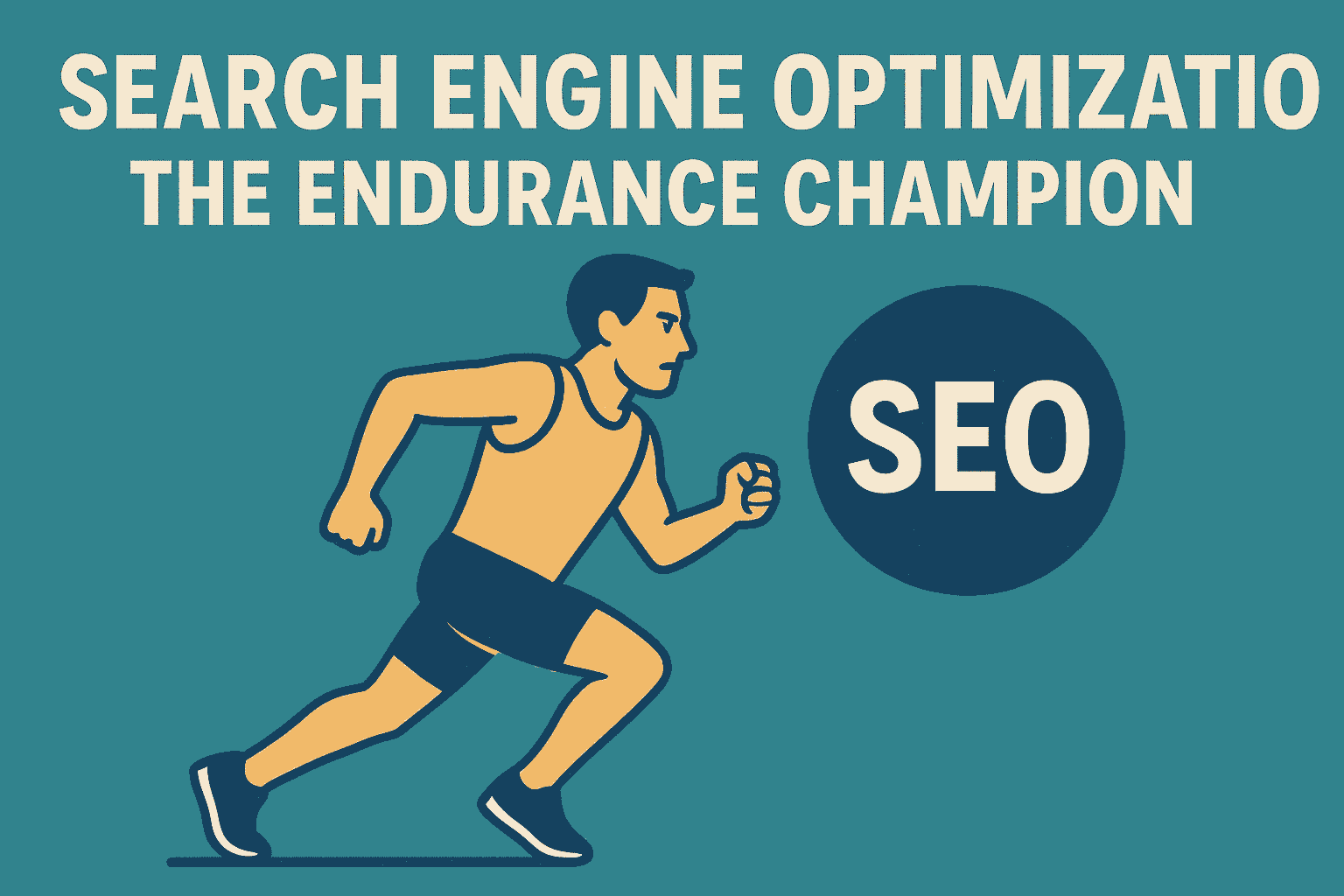 SEO builds visibility that compounds over time. Unlike ads that stop working when you stop paying, SEO continues delivering traffic long after you’ve done the work.
Long-Term Visibility: Assets That Keep Growing
Quality SEO work done today continues producing results for months or years. A well-optimized blog post written six months ago can still drive traffic daily without any additional investment.
This creates compounding returns. Each piece of optimized content adds to your digital asset portfolio. Ten articles might bring one hundred visitors daily. Twenty articles might bring three hundred. Fifty articles could drive a thousand or more.
The mathematical beauty of SEO lies in this compounding effect. Your investment in content, technical optimization, and link building pays dividends repeatedly. Unlike ads where you pay for each click, SEO generates thousands of free clicks from a single optimization effort.
Rankings tend to be stable once achieved. Sure, you need ongoing maintenance, but a page that ranks well today will likely rank well next month too. This stability makes forecasting easier and business planning more reliable.
Top rankings also build brand authority. When your business consistently appears on page one for relevant searches, customers perceive you as a leader in your industry. This brand building creates value beyond just traffic numbers.
Free Organic Clicks: No Cost Per Visitor
Every visitor from organic search is essentially free. You’ve already paid the upfront cost in content creation and optimization. Each subsequent visitor costs nothing additional.
This dramatically improves profit margins compared to paid traffic. If paid ads cost you ten dollars per customer acquisition, but organic search customers are free, your profitability on organic traffic is significantly higher.
For businesses with long sales cycles, free organic traffic is especially valuable. Someone might visit your site five times before purchasing. With ads, you’d pay for all five visits. With SEO, those visits are free.
The cost efficiency of organic traffic improves over time. Your initial SEO investment amortizes across thousands or millions of clicks. The more traffic you get, the lower your effective cost per visitor becomes.
However, “free” doesn’t mean zero effort. SEO requires significant upfront investment in content creation, technical optimization, and link building. You’re trading time and expertise for long-term results rather than trading money for immediate results.
24/7 Work Ethic: Always On, Always Earning
Your SEO-optimized content works around the clock without breaks, vacations, or sick days. At three in the morning, while you sleep, your website ranks and attracts visitors.
This passive income quality of SEO is powerful. Your content becomes a digital employee that never stops working. It answers questions, generates leads, and drives sales continuously.
Global reach amplifies this effect. While you sleep in New York, customers in Tokyo find your website. Different time zones mean different people are searching throughout the day and night. Your SEO captures all of them.
The cumulative impact is substantial. Over a year, that constant background work generates enormous value. A single optimized page might attract ten thousand visitors annually. Ten such pages deliver one hundred thousand visitors. All happening automatically.
Seasonal fluctuations still occur. Search volume varies by time of year, week, or day. But unlike ads that stop completely when paused, SEO maintains baseline performance even during slower periods.
Building Authority and Trust
High organic rankings signal authority to potential customers. People trust organic results more than paid ads. Studies show that seventy to eighty percent of searchers ignore paid ads completely, focusing only on organic results.
When your business ranks naturally for competitive keywords, customers perceive you as established and trustworthy. This credibility translates to higher conversion rates compared to paid traffic.
Organic visibility also provides free brand exposure. Even people who don’t click your listing see your brand name repeatedly in search results. This repeated exposure builds recognition and recall over time.
Review snippets, star ratings, and rich results in organic listings provide social proof. These elements increase click-through rates and pre-qualify visitors who arrive already trusting your brand.
Backlinks from SEO efforts create referral traffic too. Links from other websites drive visitors beyond just search engine traffic. This diversified traffic source adds resilience to your marketing mix.
Why You Need Both: The Synergy Strategy
Smart businesses don’t choose between ads and SEO. They use both strategically to maximize results and minimize weaknesses.
Cover Immediate and Long-Term Needs
Use paid ads to generate revenue and leads today. This immediate cash flow funds your business operations and allows you to invest in SEO.
Simultaneously, build your SEO foundation for tomorrow. While ads bring in today’s customers, your content and optimization work compound in the background, preparing for long-term success.
This dual approach eliminates the chicken-and-egg problem. New businesses often can’t afford to wait six months for SEO results. Ads provide immediate traction while SEO matures.
As your organic rankings improve, you can gradually reduce ad spend. Eventually, your SEO might generate enough traffic to make ads optional rather than essential. But you maintain the capability to turn ads on whenever needed.
Dominate Search Results Pages
When someone searches for your target keyword, appearing in both paid and organic results dominates the search page. Your brand takes up more real estate, increasing the likelihood that searchers click through to your site.
This double presence builds brand recognition faster. Seeing your company name twice on one page creates stronger mental association than a single appearance.
Even if competitors outrank you organically, your paid ad can appear above them. Even if competitors outbid you for top ad position, your organic listing provides another opportunity to capture the click.
Studies show that having both paid and organic listings increases total click-through rate beyond what either channel achieves independently. The combined effect is synergistic rather than redundant.
Gather Data Faster and Smarter
Paid ads generate data immediately. You learn which keywords convert, which ad copy resonates, and which landing pages perform best. This intelligence happens in days rather than months.
Apply these lessons to your SEO strategy. If certain keywords convert well in paid campaigns, prioritize them in your content strategy. If specific messaging drives conversions, incorporate it into your organic content.
Conversely, your SEO research identifies valuable long-tail keywords that might be overlooked in paid campaigns. These insights help you discover untapped ad opportunities with lower competition.
A/B testing happens faster with paid traffic. Test headlines, calls-to-action, and page layouts with paid traffic to quickly identify winners. Then apply those winning variations to your organic landing pages.
Risk Mitigation Through Diversification
Relying solely on ads is risky. Algorithm changes, platform policy updates, or budget cuts can eliminate your traffic overnight. SEO provides a backup traffic source that doesn’t disappear suddenly.
Relying solely on SEO is also risky. Google algorithm updates can tank your rankings without warning. Competition intensifies over time. Having paid advertising as a backup ensures you can maintain traffic during SEO setbacks.
Diversified traffic sources create business stability. If one channel underperforms temporarily, the other maintains baseline results. This resilience helps you weather market changes and competitive pressures.
Different customer segments prefer different channels. Some people specifically avoid ads and only click organic results. Others respond well to targeted advertising. Capturing both segments maximizes your total addressable market.
Strategic Budget Allocation Over Time
Smart marketers shift budget allocation based on business maturity and seasonal factors. New businesses might allocate seventy percent to ads and thirty percent to SEO initially. As organic rankings improve, that might shift to fifty-fifty or even thirty percent ads and seventy percent SEO.
During peak seasons, increase ad spend to capitalize on high demand. During slower periods, maintain SEO efforts to build foundation for the next peak season.
High-value pages warrant ad support even if they rank well organically. Your most profitable products or services deserve maximum visibility through both channels.
Competitive research informs allocation too. If competitors dominate paid search, invest more in SEO to differentiate. If they own organic results, ads provide a way to compete immediately while building your organic presence.
When to Emphasize Paid Ads
Certain situations call for heavier investment in paid advertising over SEO.
Product Launches and Time-Sensitive Campaigns
New product launches need immediate visibility. You can’t wait six months for organic rankings when your launch date is next week. Paid ads deliver instant exposure.
Limited-time promotions work similarly. If you’re running a weekend sale, paid ads can drive traffic within hours. SEO can’t respond quickly enough to support truly time-sensitive campaigns.
Event promotion requires predictable traffic at specific times. Whether it’s a webinar, conference, or grand opening, ads let you control exactly when people see your message.
Seasonal businesses compress their revenue into short windows. Halloween stores, tax preparation services, and Christmas retailers need immediate visibility during their peak season. Ads provide that instant response.
Highly Competitive Keywords
Some keywords are so competitive that ranking organically would take years and enormous resources. If established competitors have dominated rankings for a decade, paid ads might be your only realistic option for visibility.
Commercial intent keywords typically have intense paid competition but offer immediate sales potential. Keywords like “buy running shoes” or “emergency plumber near me” deliver ready-to-purchase customers. The immediate ROI justifies ongoing ad spend.
National or global markets with massive competition might require sustained ad investment. Local SEO is often achievable, but competing nationally against major brands demands deep pockets for both SEO and ads.
Testing and Validation
Before investing heavily in content creation and SEO for a keyword or topic, validate demand with paid ads. Run small test campaigns to see if people actually search for and respond to your offerings.
Testing business models or pricing structures happens faster with paid traffic. Launch multiple ad variations with different value propositions to see what resonates before committing to a long-term SEO strategy.
New market entry benefits from ad testing. Before expanding into a new geographic area or customer segment, use targeted ads to validate demand and identify the most promising opportunities.
Immediate Revenue Needs
If your business needs cash flow today, ads deliver. While SEO is the better long-term investment, sometimes you need revenue this week to make payroll or restock inventory.
New businesses often require quick customer acquisition to prove viability. Investors and lenders want to see traction. Ads can demonstrate market demand faster than waiting for organic growth.
Bridging gaps during slow seasons keeps your team employed and operations running. Even if ads barely break even, maintaining presence prevents losing market share to competitors.
When to Emphasize SEO
Other situations warrant heavier investment in organic search optimization.
Long-Term Sustainable Growth
Established businesses with stable revenue can invest patient capital in SEO. The delayed gratification delivers superior returns over multi-year time horizons.
Content-driven business models benefit enormously from SEO. If your strategy involves publishing regular educational content, SEO transforms that content into perpetual lead generation assets.
Building brand authority and thought leadership happens through consistent organic visibility. When your company dominates organic results for your industry’s key topics, you become the default authority.
Limited Marketing Budgets
Small businesses without significant ad budgets can compete through smart SEO. While you might not outspend competitors in paid advertising, you can outwork them in content creation and optimization.
Bootstrapped startups particularly benefit from SEO’s capital efficiency. Trade time and creativity for long-term results rather than trading cash for immediate clicks.
Local businesses competing against national chains can win through local SEO. While McDonald’s might dominate paid search, your locally-optimized content can beat them in “near me” searches.
Educational and Informational Content
People searching for information rather than immediate purchases prefer organic results. Educational queries like “how to fix a leaky faucet” or “what causes migraines” typically drive organic clicks rather than ad clicks.
Informational content builds top-of-funnel awareness. While these visitors might not purchase today, they enter your ecosystem and potentially convert later when they reach the buying stage.
Long-form comprehensive guides attract backlinks and social shares naturally. This earned media amplifies your reach beyond what paid distribution could achieve at comparable cost.
Building Long-Term Assets
Every piece of optimized content becomes a permanent asset. Unlike ad spend that evaporates when the campaign ends, SEO investments create owned media that generates returns indefinitely.
Your domain authority improves over time with consistent SEO effort. This makes future optimization easier and more effective, creating a virtuous cycle of improvement.
Brand equity grows through sustained organic visibility. Years of appearing at the top of search results establishes your business as the definitive source in your industry.
Creating Your Integrated Strategy
Successfully combining ads and SEO requires thoughtful planning and execution.
Start With Clear Goals
Define what success looks like for your business. Are you optimizing for immediate revenue, long-term growth, market share, or brand awareness? Different goals warrant different channel mixes.
Set realistic timelines. Understand that ads deliver immediate results but require ongoing investment, while SEO builds slowly but delivers compounding returns.
Establish key performance indicators for each channel. Track not just traffic but conversions, revenue, customer acquisition cost, and lifetime value. This data guides optimization decisions.
Allocate Budget Based on Business Stage
Early-stage businesses typically need seventy to eighty percent of budget toward ads for immediate traction, with twenty to thirty percent toward foundational SEO work.
Growth-stage businesses might shift to fifty-fifty as organic rankings begin delivering meaningful traffic while ads scale proven offers.
Mature businesses might allocate only thirty percent to ads, using them strategically for specific campaigns while the majority of traffic comes from established organic presence.
Identify Channel-Specific Opportunities
Analyze which keywords and topics are realistic to rank for organically versus which require paid support. High-competition commercial keywords might permanently need ad investment, while informational long-tail keywords are perfect for organic content.
Consider user intent throughout the customer journey. Top-of-funnel educational content ranks organically. Bottom-of-funnel commercial searches might need paid support for immediate visibility.
Leverage each channel’s strengths. Use ads for testing and immediate visibility. Use SEO for content that answers questions and builds authority.
Create Content That Serves Both Channels
Develop landing pages optimized for both organic search and paid traffic. Strong SEO foundations make your paid campaigns more effective through better quality scores and conversion rates.
Write content that can be promoted through ads initially and then rank organically over time. This dual-purpose approach maximizes return on content creation investment.
Use ad performance data to inform content strategy. Topics that convert well in paid campaigns deserve comprehensive organic content development.
Implement Consistent Tracking and Measurement
Use Google Analytics to track performance across both channels. Understand which drives more valuable traffic in terms of engagement, conversion, and revenue.
Attribute conversions correctly. Customers often interact with both ads and organic listings before converting. Multi-touch attribution reveals how channels work together.
Calculate true ROI for each channel. Factor in all costs including content creation time, technical optimization, ad spend, and agency fees if applicable.
Optimize Continuously
Paid campaigns need ongoing optimization. Test ad copy, targeting, bidding strategies, and landing pages continuously to improve performance.
SEO requires regular content updates and technical maintenance. Refresh old content, fix technical issues, and build new content to maintain and improve rankings.
Monitor competitors in both channels. When they launch new campaigns or rank for new keywords, adjust your strategy accordingly.
Common Mistakes to Avoid
Even experienced marketers make strategic errors when balancing ads and SEO.
Putting All Eggs in One Basket
Over-investing in only ads leaves you vulnerable to budget cuts, platform changes, or market shifts. Always maintain some organic presence.
Investing only in SEO means missing immediate opportunities and leaving money on the table today while waiting for long-term results to materialize.
Expecting Immediate SEO Results
SEO takes three to six months minimum to show meaningful results. Expecting overnight success leads to premature abandonment of sound strategies.
Comparing SEO timelines to ad campaign timelines creates unfair expectations. These channels operate on fundamentally different timeframes.
Neglecting Landing Page Quality
Sending paid traffic to poorly designed or slow-loading pages wastes budget. Your landing page experience matters enormously for conversion rates.
Similarly, ranking for keywords but providing poor user experience results in high bounce rates that eventually harm rankings. Quality content matters for both channels.
Ignoring Mobile Experience
Over sixty percent of searches happen on mobile devices. Poor mobile experience destroys performance in both paid and organic channels.
Fast mobile load times, easy navigation, and thumb-friendly buttons are essential for converting both paid and organic traffic.
Focusing Only on Rankings, Not Conversions
Ranking number one for keywords that don’t drive revenue is worthless. Always prioritize keywords and topics aligned with business goals.
High click costs on paid campaigns that don’t convert waste budget. Constantly optimize toward profitable conversions rather than vanity metrics.
Stopping What’s Working
When ads perform well, maintain investment rather than getting greedy and cutting budget. Sustainable success requires consistent execution.
When organic rankings improve, don’t abandon SEO maintenance. Rankings require ongoing effort to maintain against competitive pressure.
Measuring Success: Key Metrics for Each Channel
Track the right metrics to understand performance and make informed optimization decisions.
Paid Advertising Metrics
Click-through rate indicates how compelling your ads are. Low CTR suggests poor ad relevance or targeting.
Cost per click shows efficiency. Rising costs might indicate increased competition or declining quality scores.
Conversion rate reveals landing page and offer effectiveness. Low conversion rates suggest messaging misalignment or poor user experience.
Cost per acquisition is the ultimate metric. If your customer lifetime value exceeds acquisition cost by a healthy margin, the campaign is profitable.
Return on ad spend provides clear profitability measurement. A three-to-one ROAS means you generate three dollars in revenue for every dollar spent on ads.
Quality score in Google Ads affects costs and ad position. Higher quality scores reduce costs and improve visibility.
SEO Metrics
Organic traffic growth shows whether your SEO efforts are working. Track total sessions, users, and pageviews from organic search.
Keyword rankings indicate visibility for target terms. Track rankings for your most important keywords, but remember rankings are a means to an end, not the goal itself.
Impressions in Google Search Console show how often your pages appear in search results. Growing impressions mean increasing visibility even before rankings improve.
Click-through rate from search results indicates how compelling your titles and meta descriptions are. Improving CTR increases traffic without ranking changes.
Pages indexed shows whether Google is discovering and indexing your content. Indexation issues prevent ranking regardless of content quality.
Backlink growth demonstrates authority building. Quality backlinks remain a crucial ranking factor.
Domain authority (though not a Google metric) provides a rough benchmark of overall site strength compared to competitors.
Business Outcome Metrics
Total revenue from each channel shows real business impact. Ultimately, this matters more than any activity metric.
Customer acquisition cost compared across channels reveals efficiency. Lower CAC means more profitable customer acquisition.
Customer lifetime value by channel identifies which source delivers the most valuable long-term customers. Sometimes the channel with lower initial conversion rates brings better customers.
Conversion rate by traffic source reveals which channel delivers the most qualified visitors. Organic traffic often converts better than paid due to higher trust.
The Future of Ads and SEO Integration
Digital marketing continues evolving. Understanding emerging trends helps future-proof your strategy.
Artificial Intelligence and Automation
AI-powered bidding strategies in paid advertising optimize campaigns more effectively than manual management. These systems analyze millions of signals to adjust bids in real-time.
Machine learning algorithms increasingly influence organic rankings. Google’s RankBrain and BERT updates use AI to better understand search intent and content quality.
Automated content generation tools assist with SEO content creation, though human oversight remains essential for quality and originality.
Voice Search and Featured Snippets
Voice search queries tend to be longer and more conversational. Optimizing for natural language questions becomes increasingly important.
Featured snippets (position zero) capture significant traffic. Structuring content to answer specific questions increases snippet chances.
Voice assistants often read featured snippet content aloud. Ranking for snippets provides visibility in voice search results.
Video and Visual Search
Video content ranks in both traditional search and video-specific results. YouTube SEO becomes part of comprehensive search strategies.
Visual search through tools like Google Lens creates new optimization opportunities. Image SEO and proper tagging grow in importance.
Short-form video on platforms like TikTok and Instagram creates alternative discovery channels that complement traditional search.
Privacy and Tracking Changes
Cookie deprecation and privacy regulations limit targeting and tracking capabilities for paid advertising. First-party data becomes more valuable.
Privacy changes make attribution more challenging. Understanding cross-channel impact becomes both harder and more important.
Contextual targeting experiences renewed importance as behavioral tracking becomes limited.
Taking Action: Your Next Steps
Understanding ads versus SEO is just the beginning. Implementation creates results.
Audit Your Current Situation
Analyze your existing traffic sources. What percentage comes from organic search versus paid ads? Where are the gaps?
Review your current ad performance. Which campaigns drive profitable conversions? Which waste budget?
Assess your organic visibility. Which keywords do you rank for? Where are the biggest opportunities for improvement?
Understand your competitive landscape. How visible are competitors in both paid and organic results?
Set Realistic Goals and Timelines
Establish specific targets for each channel. What traffic, conversion, and revenue goals make sense given your resources?
Create a realistic timeline. Plan for quick wins from ads while understanding SEO results emerge over months.
Define success metrics. Which KPIs will you track to measure progress?
Develop Your Integrated Plan
Decide budget allocation between ads and SEO based on your business stage and goals.
Identify priority keywords and topics for each channel. Which warrant immediate ad investment? Which deserve comprehensive organic content?
Create a content calendar that serves both SEO and paid promotion. Plan content that can be amplified through ads initially and rank organically later.
Assign responsibilities. Who manages ads? Who handles SEO? How do they coordinate?
Start Executing
Launch your first integrated campaigns. Run ads while simultaneously publishing SEO-optimized content.
Set up proper tracking and measurement. Ensure you can accurately measure performance across both channels.
Create a regular review schedule. Weekly for paid campaigns, monthly for SEO progress.
Learn and Optimize
Analyze results continuously. What’s working? What’s not? Why?
Test different approaches. Try new ad formats, targeting options, content types, and optimization techniques.
Share learnings across channels. Apply ad performance insights to SEO strategy and vice versa.
Adjust budget allocation based on results. Double down on what works, eliminate what doesn’t.
Conclusion: Speed and Endurance Win Together
The ads versus SEO debate misses the point. This isn’t a choice between two competing strategies. It’s an opportunity to leverage complementary strengths for maximum business impact.
Paid advertising provides the speed your business needs for immediate visibility and revenue. SEO builds the endurance foundation that delivers sustainable long-term growth.
Together, they create a powerful marketing ecosystem. Ads feed your business today while SEO builds your future. One generates immediate cash flow to fund operations and investment. The other creates compounding assets that grow more valuable over time.
The most successful businesses don’t choose between speed and endurance. They develop both capabilities. They sprint when necessary and maintain marathon pace for the long haul.
Your competitors are using both channels. The question isn’t whether to invest in ads or SEO. It’s how to balance both effectively for your specific situation.
Start where you are. Use ads to generate immediate results and cash flow. Simultaneously begin building your SEO foundation with quality content and technical optimization. Over time, adjust your mix as organic traffic grows and business needs evolve.
The businesses that win are those that master both speed and endurance. The combination of immediate paid visibility and long-term organic presence creates unstoppable momentum.
Your journey to marketing success doesn’t require choosing between ads and SEO. It requires understanding when and how to use each one effectively. Speed gets you started. Endurance keeps you going. Together, they get you to the finish line.
Which channel will you strengthen first? Start taking action today on both fronts, and watch your business grow faster than ever before.
FAQ – ADs vs SEO: Why You Need Both for Maximum Business Growth
1: What is the main difference between ADs and SEO?
Ans: The main difference is timing and cost structure. Paid ads deliver instant visibility but require ongoing payment for each click. SEO builds visibility gradually over months but generates free organic traffic once rankings are achieved. Ads are like renting visibility, while SEO is like building owned assets.
2: Which is better for my business: paid ads or SEO?
Ans: Neither is universally “better” – you need both. Use paid ads for immediate results, product launches, and time-sensitive campaigns. Use SEO for long-term sustainable growth and cost-effective traffic. The most successful businesses integrate both strategies, using ads for quick wins while building SEO foundations for future success.
3: How long does it take to see results from SEO vs paid ads?
Ans: Paid ads deliver results immediately – often within hours of launching a campaign. SEO typically takes 3-6 months for established websites and 6-12 months for new websites to see significant results. This timing difference is why combining both strategies works so well: ads provide immediate revenue while SEO builds long-term assets.
4: Is SEO really free compared to paid ads?
Ans: SEO traffic is “free” in that you don’t pay per click, but it requires significant upfront investment in content creation, technical optimization, and link building. You’re trading time, expertise, and resources for long-term results rather than trading money for immediate clicks. Once rankings are achieved, the cost per visitor becomes increasingly lower over time.
5: Can paid ads help my SEO rankings?
Ans: Paid ads don’t directly improve SEO rankings – Google has confirmed that ad spend doesn’t influence organic rankings. However, ads indirectly benefit SEO by driving traffic that can increase brand searches, generating data about which keywords convert best, and funding content creation. The two strategies complement each other even though they don’t directly influence each other’s mechanics.
6: What happens to my traffic when I stop paying for ads?
Ans: Traffic from paid ads stops immediately when you pause or end campaigns. Unlike SEO where rankings and traffic persist after the work is done, paid advertising provides no residual benefit. This is why ads create dependency on ongoing spending, making it essential to build organic visibility alongside paid campaigns.
7: How much should I budget for ads vs SEO?
Ans: Budget allocation depends on your business stage. New businesses typically allocate 70-80% to ads for immediate traction and 20-30% to SEO foundation building. Growth-stage businesses often shift to 50-50 as organic traffic grows. Mature businesses might allocate only 30% to ads, using them strategically while organic traffic handles the majority. Adjust based on your specific goals and results.
8: Which converts better: traffic from ads or SEO?
Ans: SEO traffic typically converts better than paid traffic because organic visitors trust organic results more than ads. Studies show 70-80% of users ignore paid ads entirely. However, paid ads can target high-intent commercial keywords where conversion rates are excellent. The conversion quality depends more on keyword intent and landing page quality than the traffic source itself.
9: Do I need technical skills to do both SEO and paid ads?
Ans: Basic skills can be learned for both channels. Paid ads platforms like Google Ads have user-friendly interfaces with tutorials. SEO plugins like Yoast make optimization accessible to beginners. However, advanced optimization, competitive markets, and large-scale campaigns often benefit from expert help. Start with basics yourself, then consider hiring specialists as you scale.
10: Can small businesses compete using only SEO against competitors who use paid ads?
Ans: Yes, small businesses can compete through smart SEO, especially in local markets. While you might not outspend larger competitors in paid advertising, you can outwork them in content creation and local optimization. Local SEO, long-tail keywords, and niche topics often favor dedicated small businesses over large corporations. However, combining even small ad budgets with strong SEO creates the most competitive position.